Myths About Reaching Founders Through Newsletter Sponsorships

Venture funds and accelerators often approach newsletter sponsorships with misconceptions that either keep them from trying the channel or lead them to use it ineffectively. Correcting these myths clarifies what newsletter sponsorships can and can't do for reaching founders.
Here are the most common myths, and the reality behind each.
Myth 1: "We Need to Sponsor the Biggest Startup Newsletters"
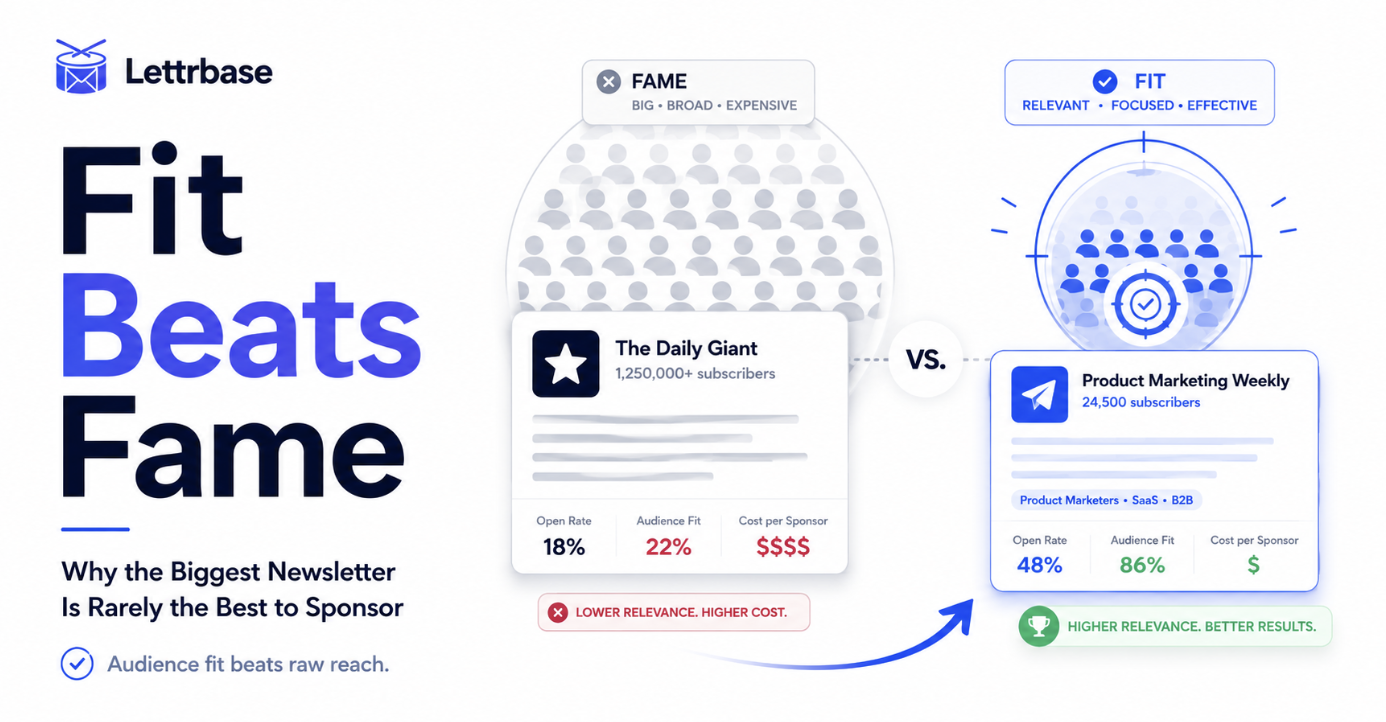
The assumption is that reaching founders means sponsoring the most well-known startup publications. In reality, the largest newsletters are often the most expensive, most competitive, and broadest — reaching a general startup audience rather than the specific founder segment a fund cares about.
The reality: Smaller, more specific founder newsletters frequently deliver better value and more relevant audiences. A newsletter read by 5,000 highly engaged B2B SaaS founders may be far more valuable to a B2B fund than a general startup newsletter with ten times the subscribers.
Myth 2: "Newsletter Sponsorships Generate Immediate Deal Flow"
Some funds expect that sponsoring founder newsletters will produce a flood of inbound deal submissions. When it doesn't, they conclude the channel doesn't work.
The reality: Newsletter sponsorships build awareness and familiarity over time. The value shows up as founders recognizing the fund when they eventually raise, or as a gradual increase in inbound quality — not as immediate deal submissions from a single placement. It's a brand-building channel, not a direct-response one.
Myth 3: "Cold Outreach Is More Efficient Than Newsletter Sponsorships"
Funds often default to cold outreach because it feels more direct and measurable. But founders increasingly ignore cold outreach, and response rates reflect that.
The reality: Newsletter sponsorships reach founders in a context where they're actually paying attention, building familiarity that makes later outreach more effective. The two approaches complement each other — newsletters build awareness that warms up subsequent direct outreach.
Myth 4: "Generic Fund Messaging Works Fine in Newsletters"
Some funds assume their standard positioning — thesis, check size, value-add — will resonate in a newsletter the same way it does on their website.
The reality: Founders skip generic fund messaging in newsletters just as they do everywhere else. What works is copy that offers something useful or speaks specifically to the founder's situation, not a restatement of the fund's standard pitch.
Myth 5: "Newsletter Discovery Is Too Time-Consuming to Be Worth It"
Funds with small teams sometimes avoid newsletter sponsorships entirely because finding the right publications seems like it would consume too much partner time.
The reality: With a discovery database, finding founder-relevant newsletters takes hours, not weeks. The time barrier that makes this myth feel true is exactly what newsletter discovery tools eliminate.
The Pattern Behind the Myths
Most of these myths share a common root: applying direct-response expectations to a brand-building channel, or assuming newsletter discovery is harder than it is. Funds that understand newsletter sponsorships as a relationship- and awareness-building channel — and that have an efficient way to find the right publications — use the channel far more effectively.
Lettrbase is a newsletter discovery database that lets VCs and accelerators search by category and surface founder-relevant newsletter leads quickly — dismantling the time-barrier myth and making it practical to build a founder-focused newsletter presence.