Newsletter Advertising Costs for D2C Brands: A Realistic Budget Guide

For D2C brands evaluating newsletter advertising as a Meta alternative, the first practical question is budget: how much should we set aside to properly test this channel?
The honest answer depends heavily on niche, audience size, and how many newsletters you want to test simultaneously. But there are realistic ranges that can help D2C marketers build a budget without first spending weeks gathering quotes.
This guide covers what newsletter sponsorships actually cost for consumer brands, what drives pricing up or down, and how to structure a test budget that gives you meaningful data.
What Determines Newsletter Sponsorship Pricing for Consumer Brands
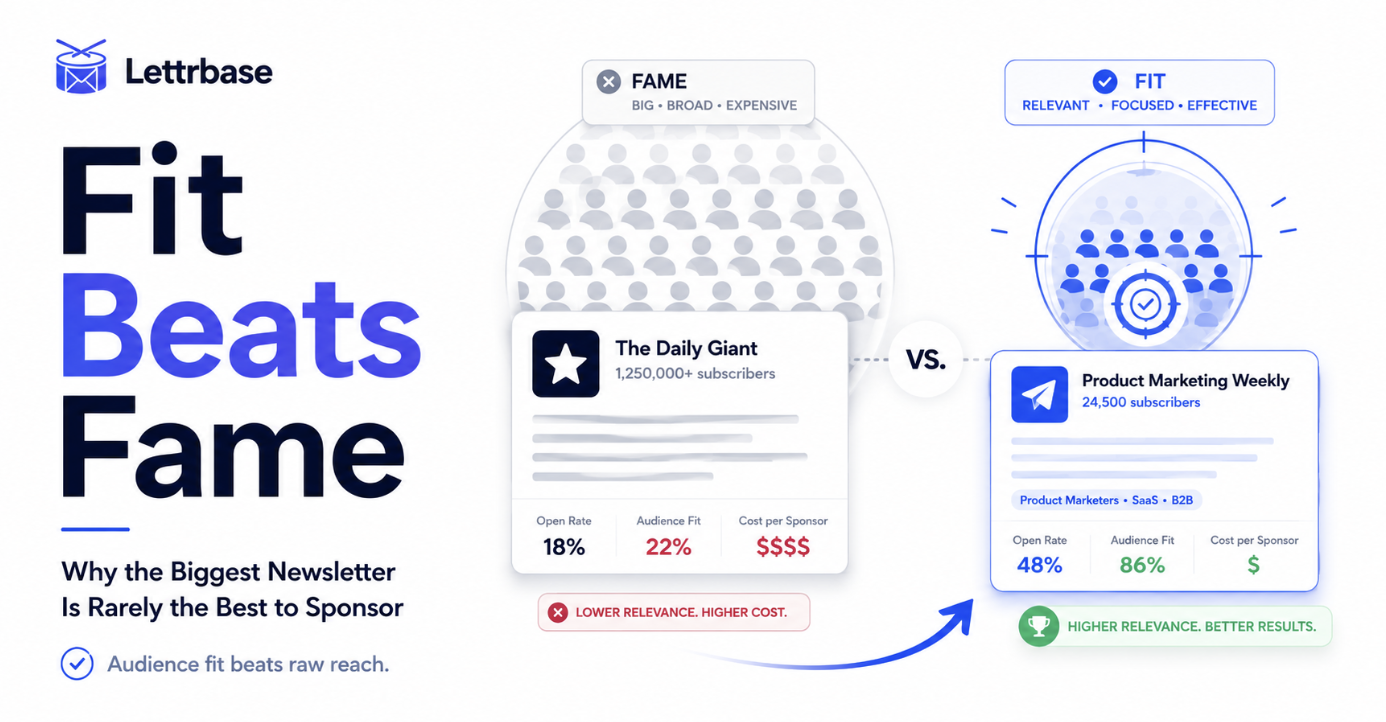
List size is the most visible factor but often the least important. A newsletter with 50,000 subscribers and a 15% open rate delivers fewer engaged impressions than a newsletter with 15,000 subscribers and a 45% open rate — but the larger newsletter will likely quote a higher price based on subscriber count alone.
Audience specificity matters more for consumer brands than raw size. A skincare brand sponsoring a general lifestyle newsletter reaches a broad, low-relevance audience. The same brand sponsoring a clean beauty or skincare-focused newsletter reaches a smaller but highly relevant audience — often at a lower cost than the larger general newsletter.
Editorial trust affects both price and performance. Newsletters where the operator personally curates content and writes with a distinct voice tend to have higher-trust audiences. Sponsorships in these newsletters often convert better, even at similar pricing to less curated alternatives.
Realistic Cost Ranges for Consumer Newsletters
These ranges are illustrative, based on general market patterns. Actual pricing varies significantly by niche — wellness, finance, parenting, food, and other consumer categories each have their own pricing dynamics. Always request current media kits.
Small niche newsletters (under 5,000 subscribers): $50-$150 per placement Often the best value for D2C brands with a tightly defined buyer persona. Operators in this range are frequently building their sponsorship business and may be flexible on format.
Mid-tier newsletters (5,000-30,000 subscribers): $150-$600 per placement The range where most D2C testing budgets should concentrate. Enough reach to generate meaningful traffic, with audiences still specific enough to maintain relevance.
Larger consumer newsletters (30,000-100,000 subscribers): $600-$2,500 per placement Broader reach, often less specific audiences. Useful once you've validated messaging and want to scale reach with proven creative.
Major consumer newsletters (100,000+ subscribers): $2,500-$8,000+ per placement Premium placements, typically only justifiable for established brands with significant awareness budgets.
A Sample Test Budget for a D2C Brand
For a D2C brand testing newsletter advertising for the first time:
Phase 1 — Discovery and initial test (Month 1)
- 8-10 placements across small and mid-tier newsletters in 2-3 relevant categories
- Budget: $1,500-$4,000
- Goal: identify which categories and audience types generate traffic that converts
Phase 2 — Validation (Month 2)
- Repeat placements (2-3x) in the 3-5 best-performing newsletters from Phase 1
- Negotiate multi-issue discounts
- Budget: $1,500-$3,500
- Goal: confirm performance is consistent, not a single-issue anomaly
Phase 3 — Scale (Month 3+)
- Expand budget toward proven performers
- Add 2-3 new test placements per month in adjacent categories
- Budget: scales with confirmed ROAS
Total initial test investment: $3,000-$7,500 over 60 days
Where D2C Brands Overspend
Starting with the biggest newsletter in the category. It feels intuitive — more subscribers should mean more sales. But large newsletters often have lower relative engagement and less specific audiences. The cost per converting customer is frequently higher than smaller, more targeted alternatives.
Single placements with high expectations. A single newsletter issue is one data point. Brands that spend their entire test budget on one or two large placements and then judge the channel based on that result are drawing conclusions from insufficient data.
Skipping the discovery step. Brands that go straight to the newsletters they've personally heard of — often through their own subscriptions — miss the dozens of relevant publications they don't know about, some of which may offer better value.
Building Your Newsletter Shortlist Before Budgeting
A realistic budget requires knowing what options exist at each price tier. Lettrbase is a newsletter discovery database that helps D2C brands search by category and surface consumer newsletter leads across lifestyle, wellness, food, finance, and other relevant verticals — giving you the research base needed to build a budget grounded in real options, not guesswork.