How an HR Team Found Niche Professional Newsletters for a Passive Candidate Campaign
A mid-sized technology company had been trying to fill a senior infrastructure engineering role for nearly four months. LinkedIn outreach had produced a steady trickle of candidates, but conversion to actual interviews was low, and the recruiting team suspected they were reaching the wrong audience — or reaching the right audience too late, after they'd already tuned out repetitive InMail messages.
The talent acquisition lead decided to test newsletter sponsorships as a way to reach passive candidates who weren't actively job searching but might be reading industry content relevant to their work.
Identifying Why LinkedIn Wasn't Working
Before trying a new channel, the team took time to understand why the existing approach was underperforming. The role required deep expertise in distributed systems and infrastructure — a narrow, senior population that was likely receiving frequent recruiter outreach already. LinkedIn InMail response rates for this candidate profile had dropped to under 5%, consistent with broader saturation trends for senior technical roles.
The team's hypothesis was that this audience might respond better to a channel that didn't feel like recruiter outreach at all — specifically, appearing as a sponsor inside content they were already choosing to read.
Defining the Newsletter Search
Rather than searching generically for "tech newsletters," the team got specific about the technical newsletter categories most likely to reach senior infrastructure engineers: developer tools and infrastructure content, distributed systems and backend engineering newsletters, and broader technology newsletters with a technical (not just business) focus.
The Discovery Process
Using a newsletter discovery database, the recruiting lead searched the technology category and reviewed the resulting leads for those specifically focused on infrastructure, backend systems, or developer tooling content — filtering out newsletters with a more general business or product management focus that wouldn't reach the right technical audience.
This filtering process narrowed an initial pool of 80+ technology newsletter leads down to 14 publications with a clear infrastructure or backend engineering focus.
Evaluating for the Right Audience
From the 14 candidates, the team requested media kits and paid particular attention to how operators described their subscriber base — looking specifically for language indicating senior or experienced engineers, rather than a broad developer audience that might skew toward more junior roles.
Eight newsletters responded with sufficiently specific audience information. Of those, three stood out: a distributed systems newsletter with under 6,000 subscribers but a 48% open rate, a broader infrastructure newsletter with around 15,000 subscribers, and a backend engineering newsletter with a strong reputation for senior-level technical depth.
Writing Recruiting Ad Copy for a Technical Audience
The team deliberately avoided generic recruiting language. Rather than "join our growing engineering team," the ad copy spoke directly to the technical problem the role involved: building and scaling a specific piece of distributed infrastructure that the company's product depended on. The copy named the actual technical challenge, rather than describing the role in generic terms.
The call to action linked to a careers page section with a detailed technical write-up of the team's infrastructure challenges, rather than directly to an application form — giving interested readers a way to self-qualify before applying.
What Happened
Across three placements in each of the three newsletters over six weeks, the campaign drove 47 visits to the technical careers page, with an average time on page of just under three minutes — notably higher than the company's typical careers page engagement, suggesting genuine interest rather than casual clicks.
Of those visits, six resulted in applications. While six applications might appear modest compared to broader recruiting campaigns, all six were qualified candidates with relevant distributed systems experience — a stark contrast to the low-relevance volume the team had been receiving through other channels. Two progressed to final-round interviews, and one was ultimately hired for the role.
The volume was lower than LinkedIn outreach, but the relevance was dramatically higher. For a role this specific, that trade-off was exactly what the team needed.
The Broader Lesson
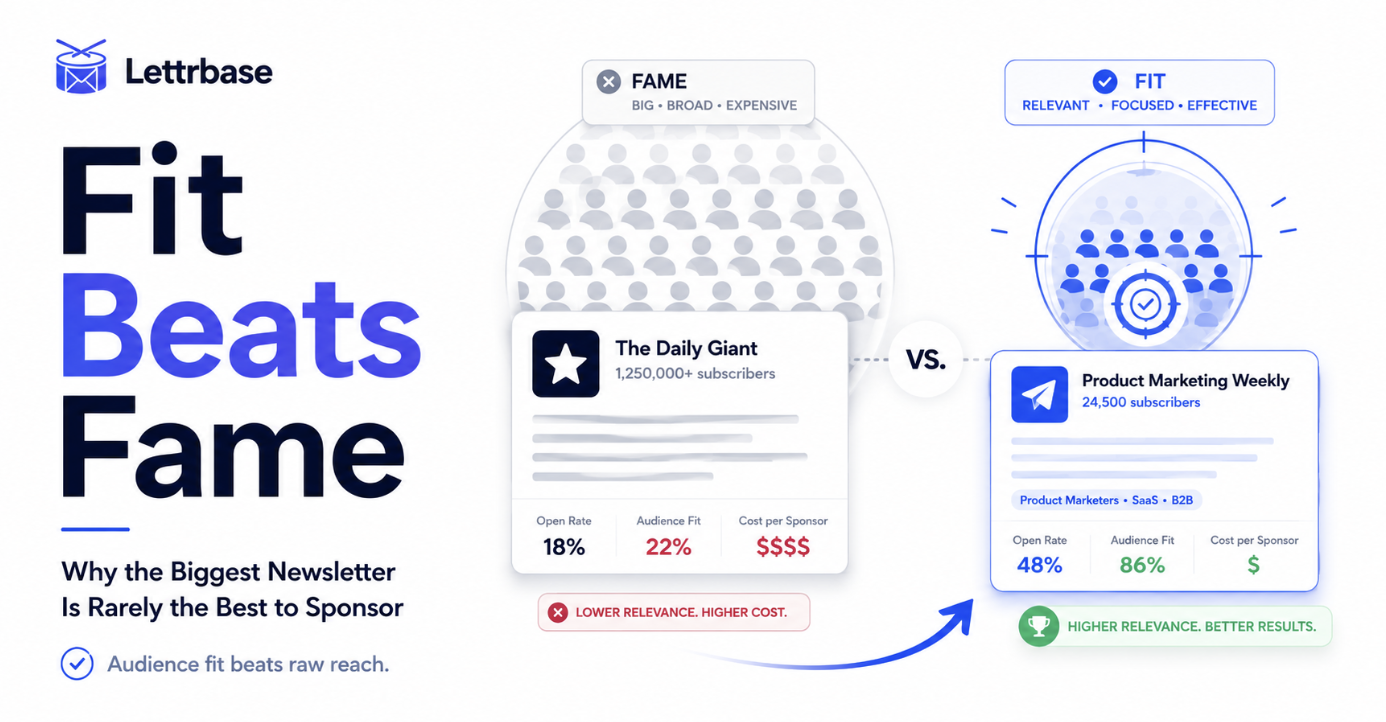
This case illustrates a pattern that holds across most newsletter recruiting campaigns: the value isn't in reaching large numbers of people, it's in reaching a small number of precisely the right people in a context where they're paying attention. Finding those precise audiences required searching by category and filtering carefully for audience specificity — not simply sponsoring the largest or most well-known technology newsletter available.
Lettrbase is a newsletter discovery database that helps recruiting teams search by category and surface professional newsletter leads — the same starting point that helped this team find newsletters with the specific, senior technical audience their hard-to-fill role required.