Fit Beats Fame: Why the Biggest Newsletter Is Rarely the Best to Sponsor
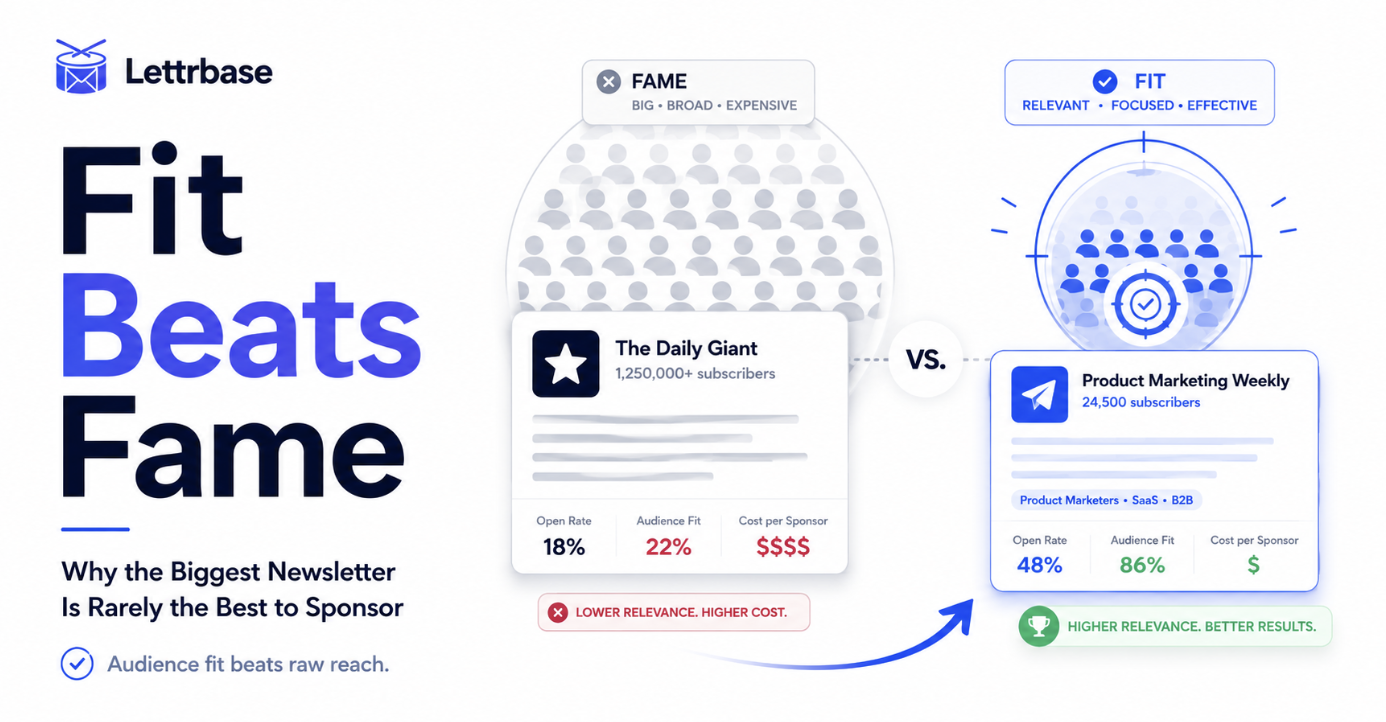
Here is the mistake behind almost every "newsletter ads don't work" story: the brand picked the biggest, most famous newsletter in their space, ran one placement, got mediocre results, and concluded the channel was broken. The real problem was not the channel. It was the choice. This post explains why fit beats fame in newsletter sponsorship, and how to spot the newsletters that actually convert.
Why the Biggest Newsletter Disappoints
The largest, best-known newsletter in any niche has three qualities working against you as an advertiser.
It is the most expensive, because its size and name command premium rates. It is the most crowded, often carrying several sponsors per issue, so your placement competes for attention. And its audience is the broadest, which means a large share of its readers were never your potential customers.
Put those together and the famous newsletter frequently delivers a high cost per acquisition despite its reach. You pay the most to reach an audience that is only partly relevant, with your message sharing space alongside other advertisers.
Why Smaller, Matched Newsletters Win
The newsletters that actually convert are usually the smaller, precisely-matched ones whose readers are your exact customer.
Consider the math. A 50,000-subscriber newsletter at a 15% open rate reaches 7,500 people, most of whom are not your buyer. A 5,000-subscriber newsletter at a 45% open rate reaches 2,250 people who are all interested in that specific niche. The smaller list often wins on cost per acquisition, because nearly everyone it reaches is a genuine prospect, and the placement usually costs a fraction of the famous one.
Audience precision beats raw reach in newsletter advertising almost every time. This is the core principle: match the newsletter's readers to your customer, and let size be a secondary consideration.
How to Spot a Good-Fit Newsletter in 20 Minutes
Before spending a dollar, run this quick evaluation on any newsletter you are considering.
Check audience fit first. Ask the operator to describe their readers. A specific answer like "B2B SaaS founders at companies under 200 people" is a strong signal. A vague one like "business professionals and entrepreneurs" usually means a broad, loosely-defined list that will dilute your placement.
Weigh open rate against list size. A small engaged list beats a large disengaged one. Ask for the trailing 90-day average open rate rather than an all-time best, and ask whether it accounts for Apple Mail Privacy Protection, which automatically loads images and inflates reported open rates.
Look at sponsor density. How many advertisers appear per issue? A single-sponsor newsletter gives your message far more attention than one carrying six placements.
Read a few back issues. Subscribe and read two or three issues. This takes ten minutes and reveals what no media kit will: whether the writing is good, whether readers would trust a recommendation, and whether your product would feel native or bolted on.
Ask about past sponsor results. Ask what click-through rates previous sponsors saw, and whether any came back for a second placement. Repeat sponsors are the single strongest signal available, because advertisers do not renew placements that failed.
For a deeper framework on any of these, see our full guide to how to qualify a newsletter before you sponsor it and the reference ranges in newsletter open rates explained.
The Catch: Your Best-Fit Newsletter Is One You Have Not Heard Of
Here is the difficulty with fit-over-fame. The famous newsletters are easy to find precisely because they are famous. The smaller, well-matched newsletters that convert better are, almost by definition, ones you have not heard of. Finding them is the real work.
This is why discovery matters so much. Rather than defaulting to the newsletter you already know, the winning approach searches for the newsletters whose audience matches your customer, most of which will be unfamiliar. See how to find newsletters to sponsor for the full process.
Lettrbase is a newsletter database built for exactly this. Search by category, surface 50-80+ newsletter leads matched to your audience, and find the smaller, precisely-fit newsletters that convert, not just the famous ones you already knew about.
The Bottom Line
Newsletter advertising rarely fails because the channel is weak. It fails when advertisers choose newsletters by name recognition instead of audience fit. The biggest newsletter is usually the priciest, most crowded, and broadest option available. The newsletters that convert are the smaller, precisely-matched ones whose readers are your exact customer. Fit beats fame, every time, and finding that fit is what discovery is for.