From Meta to Newsletters: How One D2C Brand Found Its New Acquisition Channel

A small consumer wellness brand had built its early growth almost entirely on Meta advertising. As CPMs climbed and attribution grew murkier, the founder began looking for a second acquisition channel — something that didn't depend on an algorithm or compete directly with every other brand bidding for the same audience.
This is how that search led to newsletter sponsorships, and what the discovery and testing process actually looked like in practice.
The Problem That Started the Search
The brand's Meta performance had been gradually declining for several quarters. Customer acquisition cost had risen enough that the founder, who handled most of the marketing personally, began setting aside time each week to research alternative channels.
Newsletter advertising kept coming up in industry conversations as something other small consumer brands were testing. The appeal was straightforward: reach an audience that had opted in to read something, in a context with less algorithmic noise and lower competition than the major ad platforms.
The challenge, as with most newsletter advertising attempts, was knowing where to actually start.
Defining the Audience Before Searching
Rather than starting with newsletters the founder personally read, the team began by writing a clear description of their ideal customer: someone interested in wellness, natural products, and a slower, more intentional lifestyle. From there, they identified three newsletter categories likely to reach that audience: wellness, sustainable living, and slow-living lifestyle content.
This step — defining the audience clearly before searching — proved important later. It meant every newsletter evaluated afterward was being judged against a specific standard, rather than picked based on name recognition.
Searching by Category
Using a newsletter discovery database, the team searched each of the three categories and built a combined lead list of just over 60 newsletters. This single research session replaced what would otherwise have been weeks of individually searching for wellness and lifestyle newsletters across the open web.
From the 60 leads, the team applied a simple filter: did the newsletter's audience description specifically mention wellness, natural living, or related interests, rather than generic lifestyle content? This narrowed the list to around 18 newsletters worth deeper evaluation.
Requesting Media Kits and Narrowing Further
The team reached out to all 18 newsletters requesting media kits. Of those, 13 responded within two weeks. Evaluating the responses came down to three factors: open rate relative to subscriber count, how specifically the operator described their audience, and the number of sponsor slots per issue.
Six newsletters stood out — three with under 8,000 subscribers but open rates above 40%, and three larger publications in the 20,000-40,000 subscriber range with strong audience descriptions and only one sponsor slot per issue.
Running the Test
The brand ran a 60-day test across all six newsletters, with 2-3 placements each, UTM-tagged links, and a dedicated landing page offering a small discount specific to newsletter traffic. This let the team measure both traffic and conversion by individual newsletter, rather than evaluating the channel as a whole.
Single-issue results would have been misleading. One of the eventual top performers had a disappointing first placement, but improved significantly on the second and third — likely reflecting normal variation in any individual issue's content and audience mood rather than a real signal about the newsletter's value.
What Worked
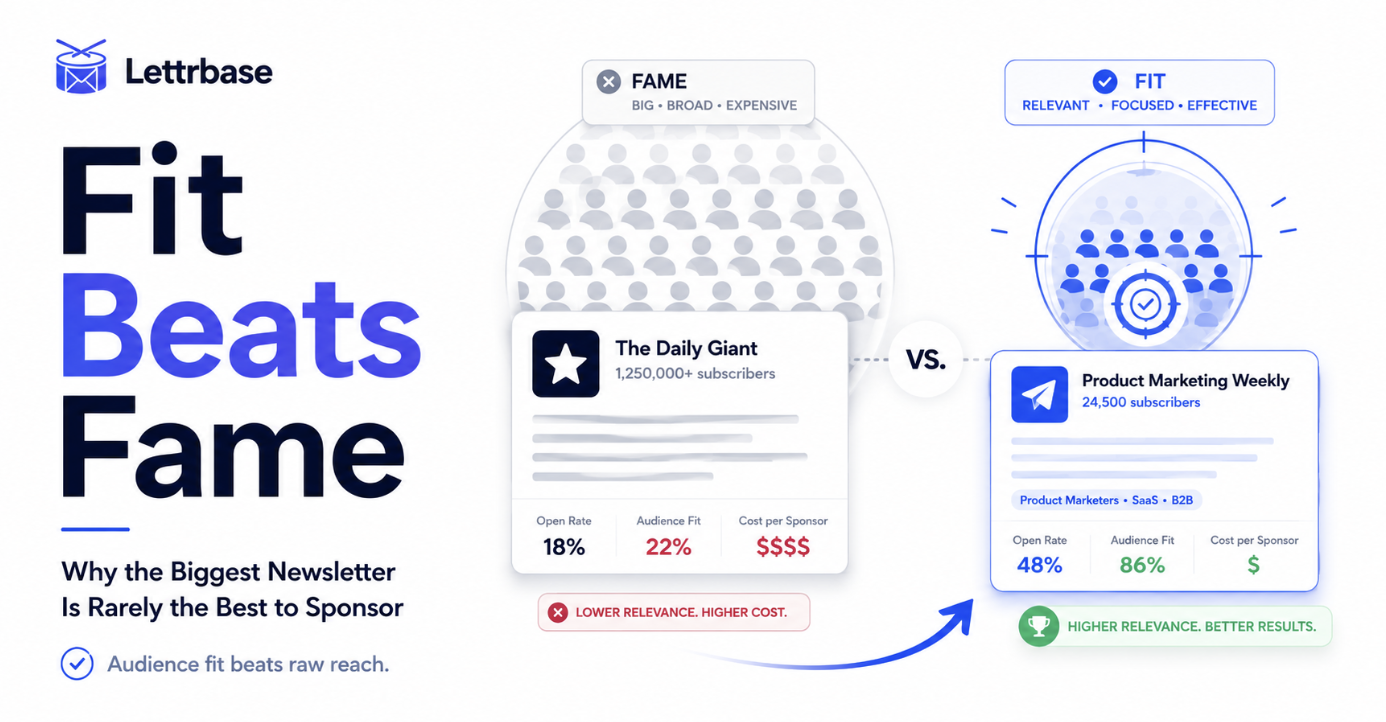
By the end of the test period, two of the six newsletters had produced a cost per acquisition below the brand's blended Meta CAC, and a third was roughly comparable. Notably, the two best performers were the smaller, more specific newsletters rather than the larger ones — echoing a common pattern in newsletter advertising where audience precision outperforms raw reach.
The brand has since built ongoing relationships with those two top-performing newsletters, negotiating multi-issue packages and increasing placement frequency, while continuing to test one or two new newsletters each quarter from the original discovery list.
The Takeaway
The shift from Meta to newsletters wasn't really about abandoning one channel for another — it was about diversifying acquisition in a way that reduced dependence on a single platform's algorithm and pricing. The discovery process, searching by category rather than relying on personal familiarity, was what made it possible to find newsletters that actually matched the brand's specific audience rather than settling for the few publications the founder happened to already know.
Lettrbase is a newsletter discovery database that helps D2C brands search by category and surface consumer newsletter leads — the same starting point that made this brand's channel diversification possible.